Warehouses don’t stay clean just because the floors are swept. Dust collects on overhead beams, grease builds up in forklift lanes, and contaminants settle on equipment and inventory every day.
Professional warehouse cleaning services and deep cleaning remove these hidden hazards to improve safety, protect valuable assets, and support OSHA compliance across facilities in Minneapolis and Saint Paul.
What Areas Need Deep Cleaning in a Warehouse?
Daily floor sweeping keeps aisles tidy, but operational grime settles far beyond the reach of standard janitorial tools. High-dust warehouse cleaning targets elevated structural elements where dry particulates collect over months of active shipping and production.
Overhead structural trusses, exposed ductwork, utility pipes, and high-bay lighting fixtures trap rising airborne particles. Vibrations from forklifts or passing trucks dislodge this debris, dropping soot and dust onto clean inventory or sensitive machinery below.
Specialized crews use scissor lifts and high-CFM HEPA vacuum systems to perform thorough overhead beam dust removal without releasing contaminants back into your breathing zone.
Floor-level operations require equal attention. Heavy forklift traffic grinds grease, tire rubber, and winter salt into porous concrete surfaces across facilities in Eagan and Bloomington.
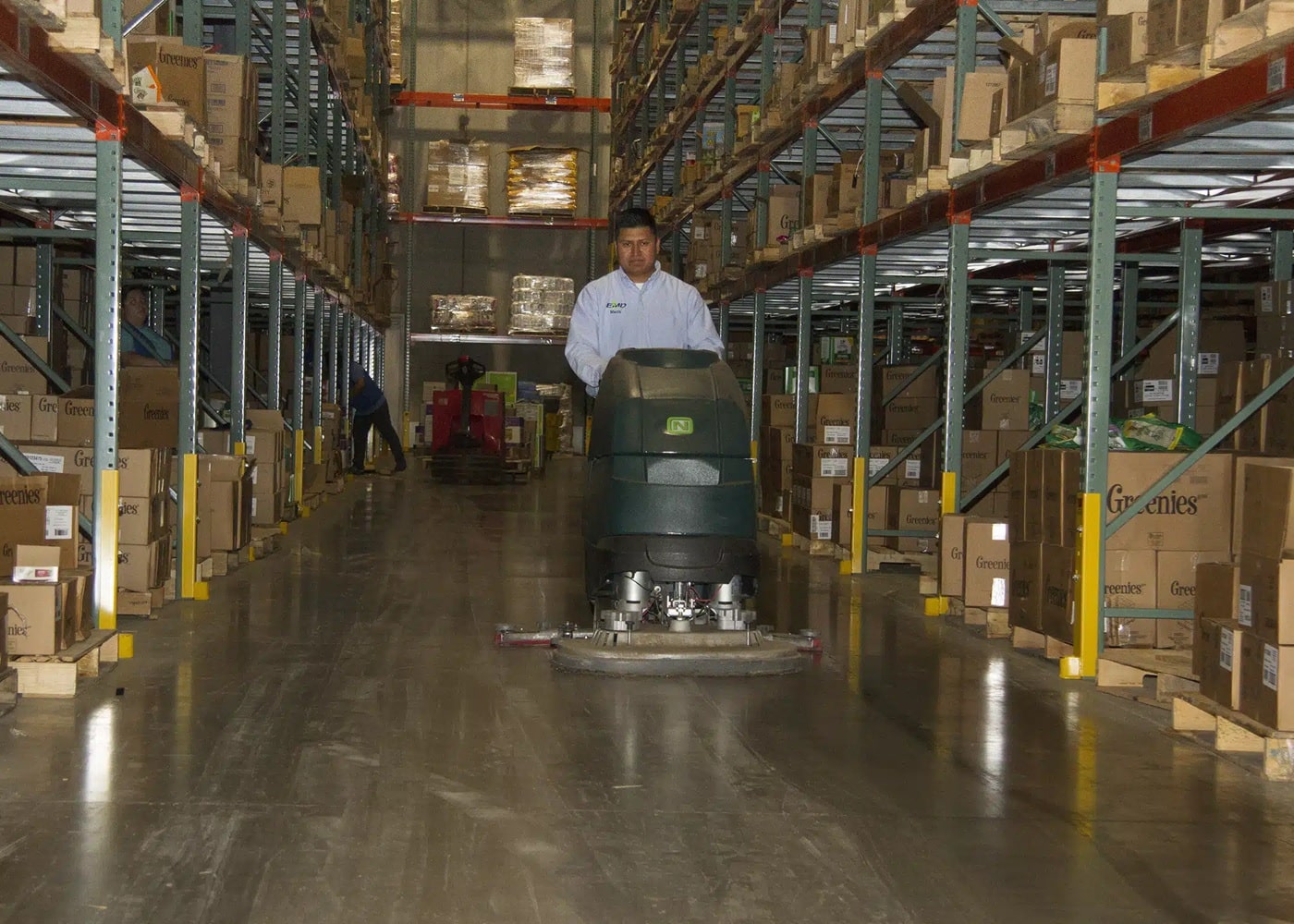
Industrial floor degreasing removes these slippery residues using commercial auto scrubbers and specialized emulsifiers, restoring traction and safety across loading docks.
Industrial equipment sanitation targets chemical residue, cutting oils, and packed grit on manufacturing machinery.
Techs clean exterior housings and cooling vents using non-conductive methods, protecting sensitive electronics while preventing heat buildup that shortens equipment lifespans.
Different warehouse areas require different cleaning methods. Here’s how routine maintenance compares with professional deep cleaning.
| Facility Zone | Routine Maintenance | Deep Sanitation Method |
| Overhead Beams & Trusses | Visual inspection | High-CFM HEPA vacuuming via lift equipment |
| Concrete Aisles | Push sweeping & light mopping | Heavy-duty auto-scrubbing & industrial degreasing |
| Production Machinery | Surface wipe-downs | Solvent-free degreasing & vent line clearing |
| High-Bay Storage Racks | Shelf dusting | Non-disruptive elevated vacuuming & wipe-downs |
How Does Warehouse Deep Cleaning Support OSHA Compliance?
Airborne wood particulate, organic materials, and metallic dust pose major safety hazards when left on elevated surfaces. Federal safety guidelines strictly regulate overhead dust buildup to prevent flash fires and secondary explosions.
Maintaining OSHA combustible dust compliance requires removing fine dust deposits before they exceed 1/32 of an inch over 5 percent of a facility’s surface area.
Systematic high-dusting removes these fine hazards from light fixtures, HVAC returns, and steel purlins. Clean air systems run more efficiently, reducing strain on filtration machinery while cutting workplace allergen counts during cold Minnesota winters when facilities remain sealed.
Reliable vendor execution keeps operations running smoothly without management headaches.
Sharon Trocke, a local client, experienced this consistency firsthand. “EMD Cleaning has been a wonderful service for all our cleaning needs,” Trocke noted after partnering with the team for ongoing building upkeep and polished concrete floor maintenance. “Their staff are always friendly and professional… and attentive to our sometimes picky requests.”
Partnering with a dedicated industrial cleaning provider gives management full confidence during surprise safety audits and customer facility tours across the Twin Cities.
Which Facilities Benefit Most from Warehouse Deep Cleaning?
Professional warehouse deep cleaning services benefit facilities where dust, debris, and heavy equipment can impact safety, inventory, or productivity. Common facilities include:
- Food warehouses: Remove dust and debris that can affect product storage and support sanitation standards.
- Medical supply distribution centers: Maintain cleaner storage areas to help protect sensitive products and packaging.
- Manufacturing facilities: Clean equipment, floors, and overhead surfaces to reduce buildup that can affect operations.
- Automotive suppliers: Remove metal shavings, oils, and grease that create slip hazards and contaminate work areas.
- Packaging facilities: Control paper dust and packaging debris that accumulates on machinery and storage racks.
- Logistics and distribution centers: Keep loading docks, aisles, and high-bay storage areas clean to support efficient daily operations.
- Cold storage warehouses: Remove dust and grime from non-refrigerated support areas while following facility-specific cleaning requirements.
- E-commerce fulfillment centers: Maintain clean picking, packing, and storage zones to protect inventory and create a safer workplace.
How Can You Schedule Deep Cleaning Without Stopping Production?
Stopping distribution lines or pausing shipping schedules for building maintenance cuts directly into profitability. Facilities across Mendota Heights, Woodbury, and Hudson, WI require flexible cleaning strategies that adapt to active production shifts.
- Zone-by-zone cleaning isolates specific racking bays or production lines using physical containment barriers, allowing workers to operate safely in adjacent sections.
- Off-hours and weekend execution completes heavy overhead vacuuming and aggressive floor scrubbing when machinery is idle and foot traffic hits zero.
- Heavy-duty ride-on sweepers and auto-scrubbers cover expansive concrete floor square footage in a fraction of the time required by standard manual equipment.
- Dedicated high-reach vacuum attachments clear overhead beams from ground level where lift access is restricted by narrow aisle widths.
Tailored cleaning schedules preserve full operational throughput while delivering thorough environmental sanitation across every shift.
Schedule Your Industrial Facility Assessment
Every warehouse has different cleaning requirements based on inventory, equipment, production schedules, and dust levels.
EMD Commercial Cleaning creates customized warehouse cleaning plans for manufacturers, logistics centers, and distribution facilities throughout Minneapolis, Saint Paul, and the surrounding Twin Cities. Schedule your warehouse deep clean today.
Warehouse Deep Cleaning FAQs
How often should an industrial facility perform overhead beam dust removal?
Most active manufacturing sites and logistics hubs need overhead beam dust removal every 6 to 12 months. Facilities processing heavy cardboard, wood materials, or powders may require quarterly cleanings to satisfy local fire codes and OSHA safety standards.
Can industrial equipment sanitation happen during live operational shifts?
Yes. Cleaning teams schedule machinery degreasing around active shift changes or planned maintenance downtime. Crews focus on isolated work zones, using low-noise equipment and targeted containment barriers to prevent operational disruption.
What causes rapid concrete floor deterioration in local Twin Cities warehouses?
Winter weather in Minnesota brings road salt, moisture, and chemical ice melt indoors on forklift tires and boots. Combined with heavy machinery traffic, these abrasive compounds grind into unprotected concrete, causing pitting, slick oil-salt slurry, and surface breakdown if not degreased regularly.
How do high-dusting crews protect lower-level inventory from falling debris?
Technicians deploy heavy-duty containment sheeting over racking bays and active work areas before starting elevated cleaning. High-CFM HEPA vacuums capture dust directly at the beam surface rather than blowing air, preventing particulates from scattering through your building.